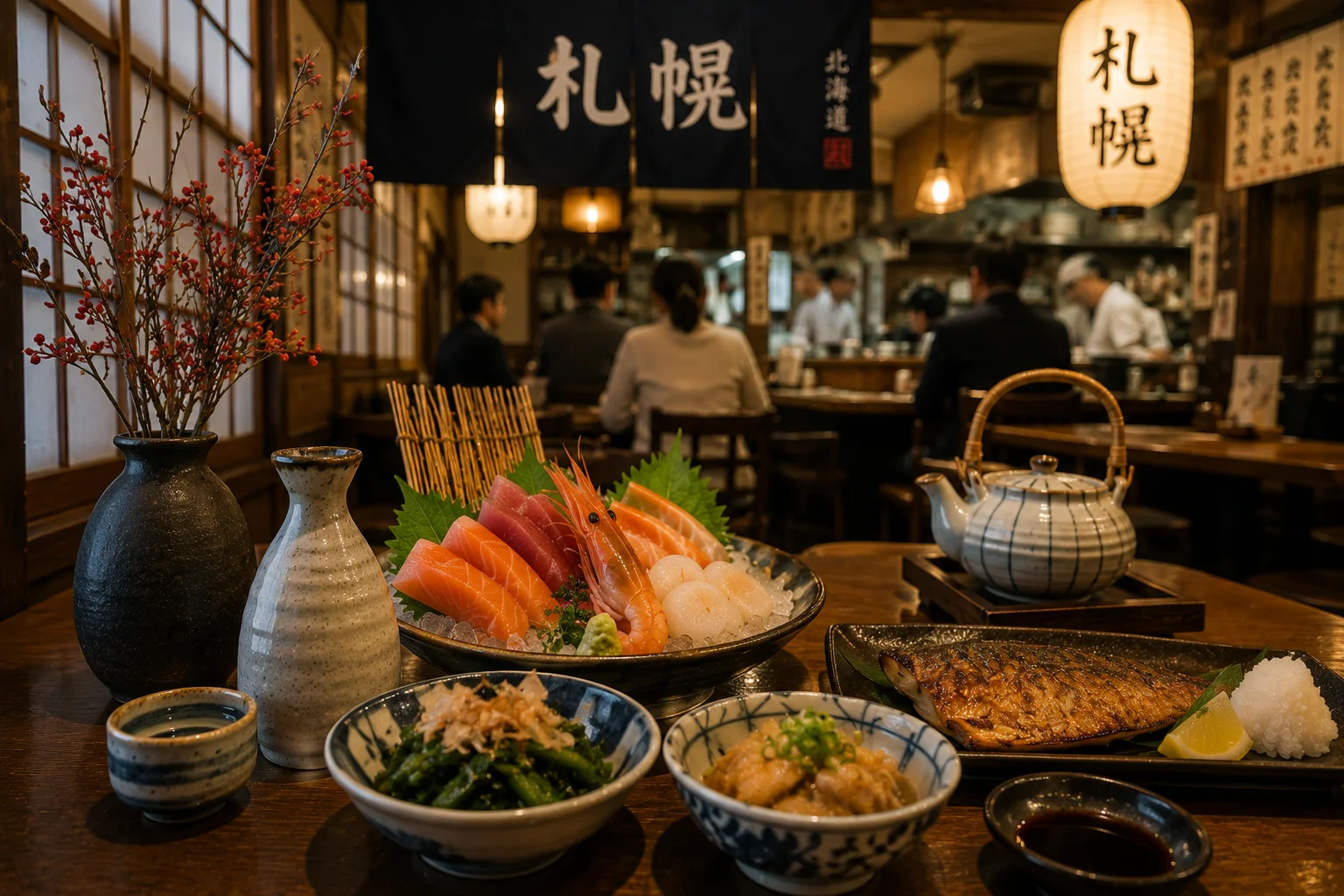
Sapporo is widely recognized for its diverse food scene, but understanding the city’s dining culture can make the experience even more rewarding. Eating in Sapporo is not only about discovering local specialties. It is also about understanding how Japanese hospitality, seasonal ingredients, restaurant etiquette, and social dining traditions come together around the table.
As the largest city in Hokkaido, Sapporo offers a wide range of dining environments. Travelers can enjoy a quick meal at a casual noodle shop, share small dishes at an izakaya, explore fresh seafood at a market, or spend an evening at a refined restaurant. Each setting provides a different perspective on Japanese food culture.
For international visitors, learning a few basic customs before arriving can make dining more comfortable while also helping them appreciate the details that make meals in Japan distinctive.
Understanding Dining Culture in Sapporo
Sapporo’s dining culture reflects both traditional Japanese customs and the unique character of Hokkaido. The city’s northern location, seasonal climate, and access to fresh local ingredients have all influenced how people eat and what appears on restaurant menus.
Food is closely connected to hospitality
Japanese hospitality is often associated with the concept of omotenashi, which emphasizes thoughtful service and attention to guests. This philosophy can be experienced in many Sapporo restaurants, from small family-run establishments to sophisticated dining rooms.
The way food is presented, how dishes arrive at the table, and how staff interact with guests can all be part of the experience. In some traditional settings, service is intentionally subtle, allowing diners to enjoy their meal without unnecessary interruptions.
For visitors, this means that dining is not simply about ordering food. The atmosphere, presentation, timing, and service can all contribute to the overall experience.
Seasonal ingredients play an important role
Japan has a strong appreciation for seasonal ingredients, and Sapporo is particularly well suited to this approach. Hokkaido produces a wide range of agricultural products and is surrounded by waters rich in seafood.
Menus can therefore change throughout the year. Winter may bring warming dishes and seasonal seafood, while summer offers fresh vegetables and lighter preparations. Autumn can highlight mushrooms and agricultural produce, while spring introduces another selection of fresh ingredients.
Travelers who return to Sapporo during different seasons may discover that the dining experience feels completely different even when visiting familiar types of restaurants.
Essential Japanese Dining Etiquette
Visitors do not need to memorize every Japanese dining rule before traveling to Sapporo. However, understanding a few basic customs can make meals more comfortable and show respect for local traditions.
Chopstick manners
Chopsticks are commonly used in restaurants throughout Sapporo. When using them, avoid pointing directly at other people, playing with them, or leaving them standing upright in a bowl of rice.
When taking a break during a meal, place chopsticks on the provided rest rather than across the bowl whenever possible.
It is also best to avoid passing food directly from one pair of chopsticks to another. This action has associations with Japanese funeral customs and is considered inappropriate at the dining table.
Saying itadakimasu and gochisousama
Two expressions visitors may hear frequently are itadakimasu and gochisousama.
Itadakimasu is traditionally said before eating and expresses appreciation for the food and everyone involved in bringing it to the table. Gochisousama, often said after a meal, expresses appreciation for the meal and hospitality.
International visitors do not have to use these expressions, but learning them can provide a small connection to Japanese dining customs.
Avoid wasting food
Japanese dining culture generally places value on appreciating ingredients and avoiding unnecessary waste. Ordering an appropriate amount of food is therefore a considerate practice.
This is particularly relevant at izakaya, where multiple dishes may be shared. It is better to begin with a few dishes and order additional food if necessary rather than ordering far more than the group can finish.
The Role of Izakaya in Sapporo
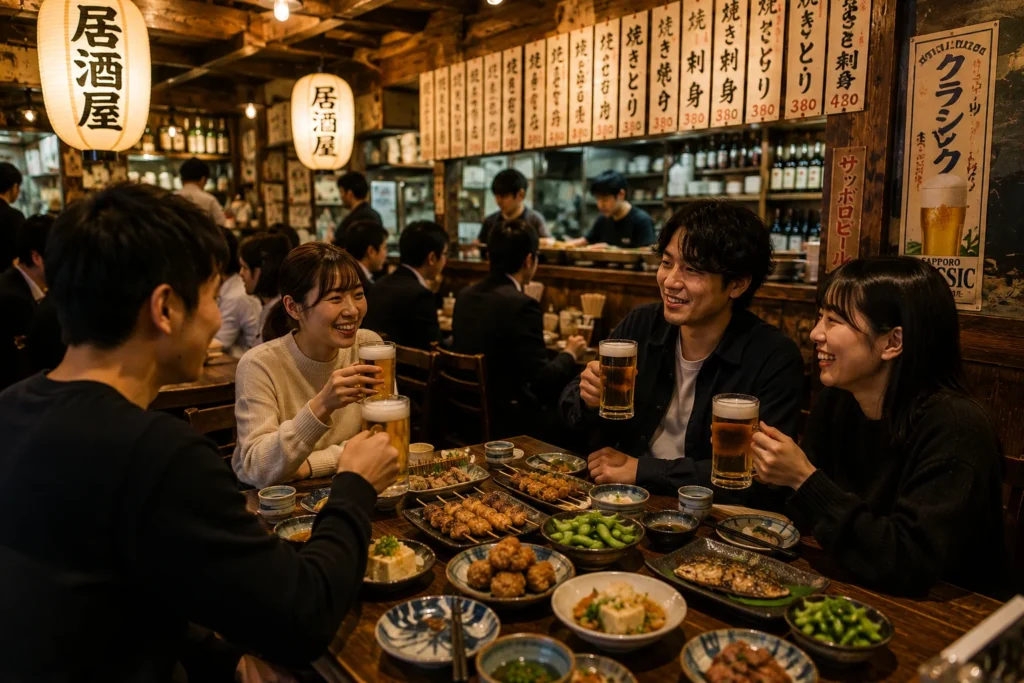
Izakaya are an important part of Japan’s social dining culture and can be especially enjoyable for travelers exploring Sapporo after dark.
Sharing small dishes
Unlike restaurants that revolve around one main course, izakaya typically offer a wide selection of smaller dishes. Guests can order grilled meat, seafood, vegetables, fried foods, tofu, pickles, and other specialties to share.
This style of dining encourages people to try different flavors throughout the evening. It is also particularly useful for travelers who want to experience several Hokkaido ingredients without committing to a single large dish.
For groups, the shared format makes the meal more interactive and social.
Dining at a relaxed pace
Izakaya meals are generally not designed to be rushed. Guests can order additional dishes as the evening continues, enjoy drinks, and spend time talking between courses.
This slower pace is different from the quick dining experience found at some casual restaurants. It makes an izakaya a good choice for travelers who want to experience the social side of Japanese food culture.
How Seasonal Dining Shapes Sapporo
The changing seasons have a noticeable influence on dining throughout Hokkaido. Weather affects not only the ingredients available but also the types of meals that feel most appropriate.
Winter dining traditions
Winter is an especially distinctive time to experience Sapporo. Snow-covered streets and low temperatures create a natural preference for warm, comforting dishes.
Ramen, soup curry, hot pots, grilled seafood, and other hearty meals become particularly appealing after spending time outdoors. Sitting inside a warm restaurant with a steaming meal can become one of the highlights of a winter itinerary.
Seafood also remains an important part of the season. Depending on timing and availability, visitors may find crab and other cold-water specialties featured prominently on menus.
Summer dining experiences
Summer creates a completely different atmosphere. Hokkaido’s agricultural production becomes more visible through fresh vegetables and seasonal produce.
The warmer weather also makes outdoor activities easier to combine with dining. Travelers can spend the day exploring parks, markets, and neighborhoods before enjoying a relaxed dinner in the evening.
Because Sapporo’s dining culture changes with the seasons, food can become another reason to visit the city at different times of year.
Dining at Markets and Casual Restaurants
Not every memorable meal needs to take place in an upscale restaurant. Sapporo’s markets and casual eateries provide travelers with accessible ways to explore local food culture.
Discovering ingredients at local markets
Markets can be particularly interesting for visitors who want to see Hokkaido’s ingredients before they are prepared.
Seafood, vegetables, fruit, dairy products, and prepared foods can often be found alongside restaurants and food stalls. Walking through a market allows travelers to observe what is currently in season and discover ingredients they may not have encountered before.
Seafood bowls are a popular choice because they can combine several ingredients in one meal, making them convenient for first-time visitors.
Small restaurants offer local character
Neighborhood restaurants can provide a more intimate experience than large commercial dining areas. Some specialize in a single dish, while others serve menus built around local ingredients.
These smaller establishments can also provide an opportunity to observe how local residents dine. The atmosphere may be simple, but the food and hospitality can make the experience memorable.
Travelers who want to explore beyond individual dishes can use a broader sapporo dining experiences guide to understand how different restaurants and dining styles fit into a wider Sapporo itinerary.
The Importance of Presentation
Japanese cuisine is known not only for its flavors but also for the way food is presented. This attention to appearance can be noticed across different levels of dining in Sapporo.
Presentation reflects the season
The colors, dishes, garnishes, and arrangement of food can change according to the season. A winter meal may emphasize warm and comforting elements, while summer dishes can feature lighter colors and refreshing ingredients.
This visual approach encourages diners to appreciate food with more than just their sense of taste.
Traditional tableware adds character
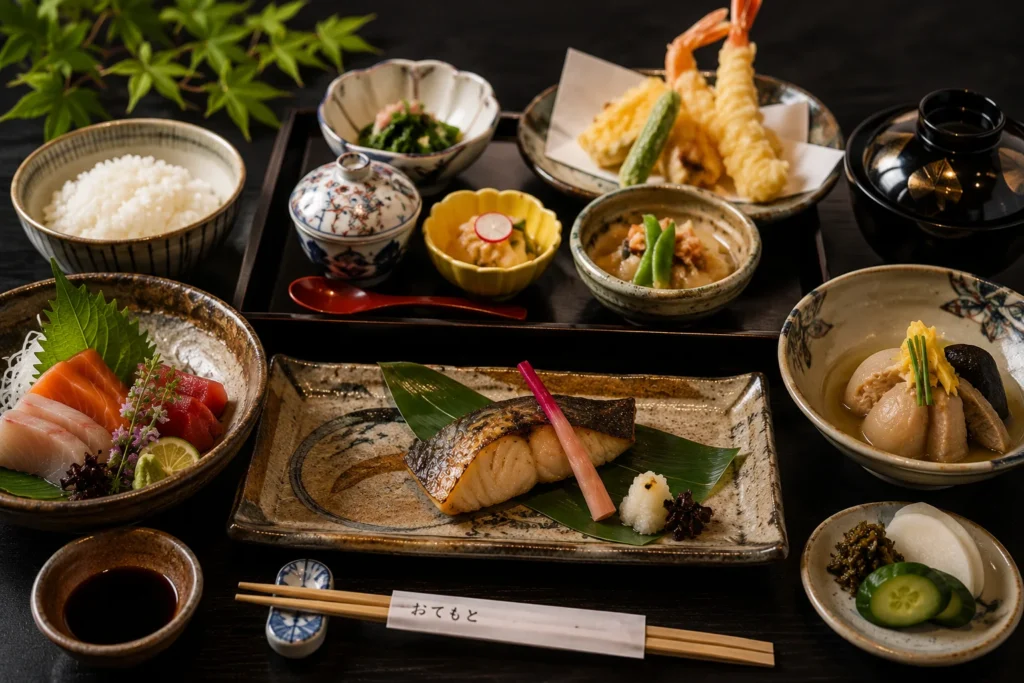
Ceramic bowls, lacquerware, wooden trays, and other forms of Japanese tableware are often selected to complement particular dishes.
At traditional establishments, the tableware can become part of the overall dining experience. Even simple dishes can feel distinctive when served in carefully chosen vessels.
Dining for Different Types of Travelers
Sapporo’s variety means that different travelers can find dining experiences suited to their preferences.
Couples
Couples may prefer quieter restaurants, intimate dining rooms, or places that emphasize seasonal menus and attentive service. Dinner can also be combined with an evening walk through the city to create a more complete experience.
Families
Families can benefit from casual restaurants with varied menus and flexible seating. Shared dishes can also make it easier for different family members to try foods without everyone needing to order the same thing.
Solo travelers
Sapporo is also well suited to solo dining. Ramen shops, sushi counters, casual restaurants, and food markets often make it easy to enjoy a meal independently.
Solo travelers can take advantage of this flexibility to try several different types of cuisine throughout their stay.
Tips for Enjoying Dining Culture in Sapporo
A few simple habits can help international visitors feel more comfortable when eating in the city.
Observe before ordering
If you are unfamiliar with a restaurant’s system, take a moment to observe what other customers are doing. Some establishments use ticket machines, while others require guests to order directly from staff.
Looking at menus carefully can also help identify portion sizes and ingredients before placing an order.
Be open to unfamiliar dishes
Sapporo offers many familiar Japanese dishes, but some of the most interesting experiences come from trying something new.
Hokkaido seafood, regional vegetables, local dairy products, and seasonal specialties can introduce travelers to flavors they may not encounter elsewhere in Japan.
Respect the atmosphere
Different restaurants have different expectations. A lively izakaya may encourage conversation, while a traditional restaurant may have a quieter atmosphere.
Paying attention to the environment and following the behavior of other diners is usually enough to understand what is appropriate.
Conclusion
Japanese dining culture in Sapporo combines hospitality, seasonal ingredients, traditional etiquette, and a wide variety of dining environments. For travelers, understanding these elements can transform an ordinary meal into a more meaningful part of the journey.
From sharing small dishes at an izakaya to enjoying seasonal seafood, exploring local markets, or sitting down for a carefully prepared dinner, every dining style offers a different perspective on Sapporo.
The most rewarding approach is to remain curious and flexible. Try local specialties, respect basic dining customs, pay attention to seasonal ingredients, and allow enough time to enjoy the atmosphere. Food is one of the easiest ways to connect with a destination, and in Sapporo, it provides an especially rich introduction to the culture and character of Hokkaido.
Frequently Asked Questions
What is dining culture like in Sapporo?
Sapporo’s dining culture combines traditional Japanese customs with Hokkaido’s local ingredients. Seasonal food, attentive hospitality, shared dishes, seafood, and casual as well as refined restaurants are all important parts of the city’s food scene.
Is it difficult for tourists to follow Japanese dining etiquette?
No. Visitors only need to understand a few basic customs, such as proper chopstick use, avoiding food waste, and respecting the atmosphere of the restaurant. Most establishments are accustomed to international travelers.
What is an izakaya?
An izakaya is a Japanese-style dining establishment that typically serves drinks alongside a variety of small dishes. It is often a social place where guests share food and spend time together.
What should travelers try in Sapporo?
Popular choices include miso ramen, soup curry, fresh seafood, Jingisukan, seasonal Hokkaido ingredients, and dishes featuring local dairy products.
Is Sapporo suitable for solo dining?
Yes. Ramen shops, sushi counters, markets, and many casual restaurants are comfortable options for solo travelers, making it easy to explore the city’s food culture independently.